Palm Springs is small enough that you can cover most of it in three days without feeling rushed. The city rewards a slower pace: morning coffee, pool time at midday, late afternoon exploration before the light gets good. Here's a day-by-day breakdown of what works and in what order.
Day 1: Aerial Tram and Arrival Day
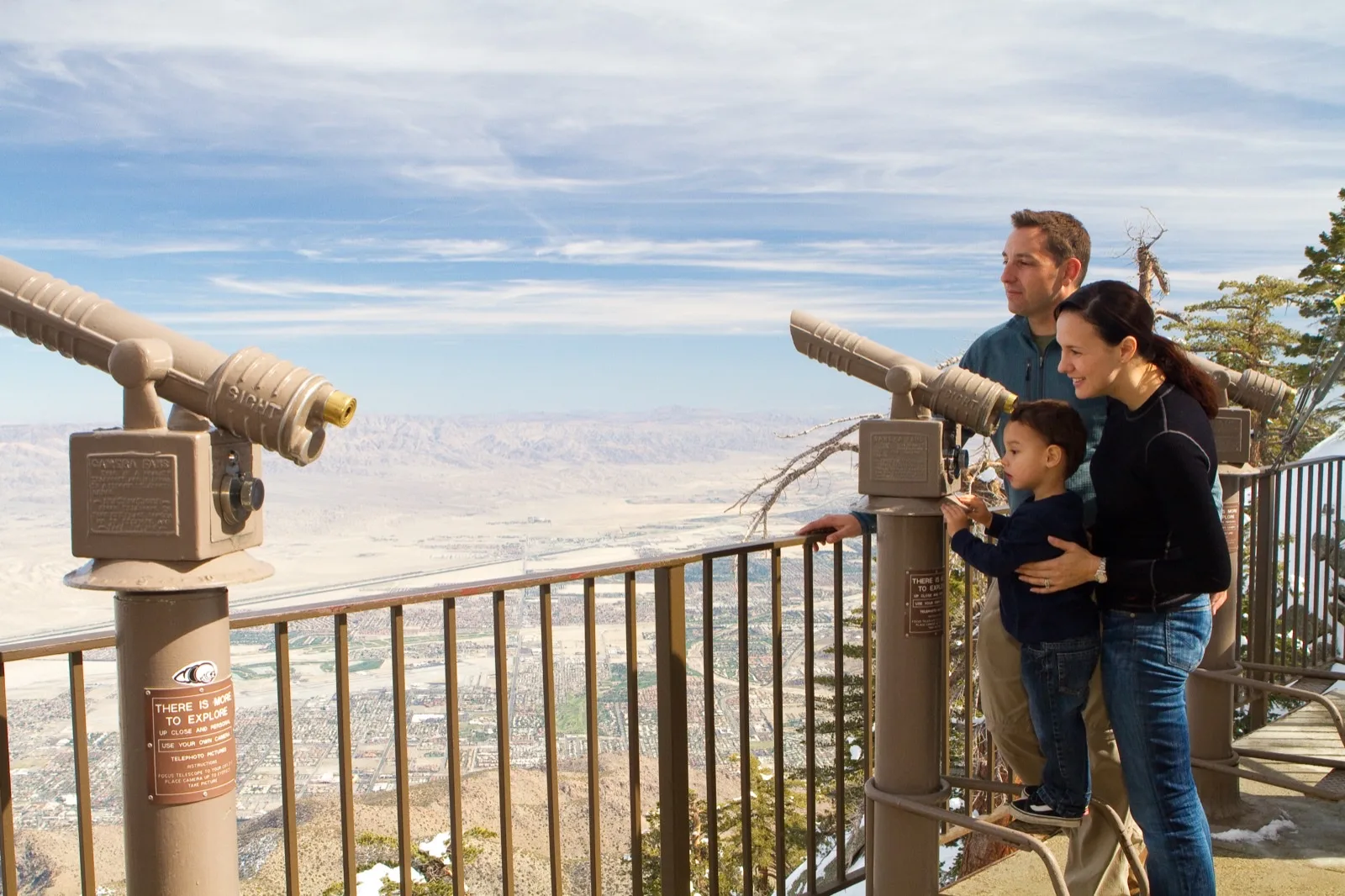
Do the aerial tram first. The Palm Springs Aerial Tramway leaves from the valley floor at 2,643 feet and drops you at the Mountain Station at 8,516 feet in about 10 minutes. At the top, the temperature is typically 30 to 40 degrees cooler than the desert below. There are hiking trails ranging from easy walks to serious backcountry routes in the San Jacinto Wilderness.
Book tickets in advance, especially on weekends. The first tram departs at 10am on weekdays, 8am on weekends. Go early. By noon the line is long and the crowds at the top increase. The ride costs about $31 for adults. Budget 2 to 3 hours for the full experience including hiking.
Afternoon: check into your rental or hotel, decompress at the pool. Palm Springs afternoons are made for doing nothing. The city's mid-century architecture was designed around outdoor living, and if you're staying in a vacation rental with a private pool, this is when you use it.
Evening: Palm Canyon Drive is the main strip. Walk it and choose somewhere for dinner. Sandfish is well-regarded for sushi. Tropicale is a mid-century throwback with strong cocktails and good food that fits the city's vibe. Reservations on weekends, especially in peak season (January through April).
Day 2: Downtown, Architecture, and the Art Museum
If you're staying at The Sundune, you're a 20-minute walk from Koffi and about 10 minutes from the aerial tram road. The location removes a lot of logistics from this kind of itinerary.
Morning: coffee at Koffi (1700 S Camino Real or the North Palm Springs location). It's the closest thing to a local institution the city has. Then walk downtown.
Palm Springs Architecture: the city's mid-century modern heritage is genuinely distinctive and worth slowing down for. The Kaufmann Desert House (designed by Richard Neutra, 1946) is on Tahquitz Canyon Way, privately owned but visible from the street. The Tramway Gas Station, designed by Albert Frey, is at the gateway to the tram road and is now the Palm Springs Visitor Center. The Sunnylands estate in Rancho Mirage, where presidents have stayed, offers guided tours by reservation.
The Palm Springs Art Museum is on Museum Drive, about a block off Palm Canyon. Its collection skews toward 20th-century American and California art, with some excellent pieces and a good architecture and design section covering the valley's modernist legacy. Admission is $17.50 for adults. Closed Tuesdays.
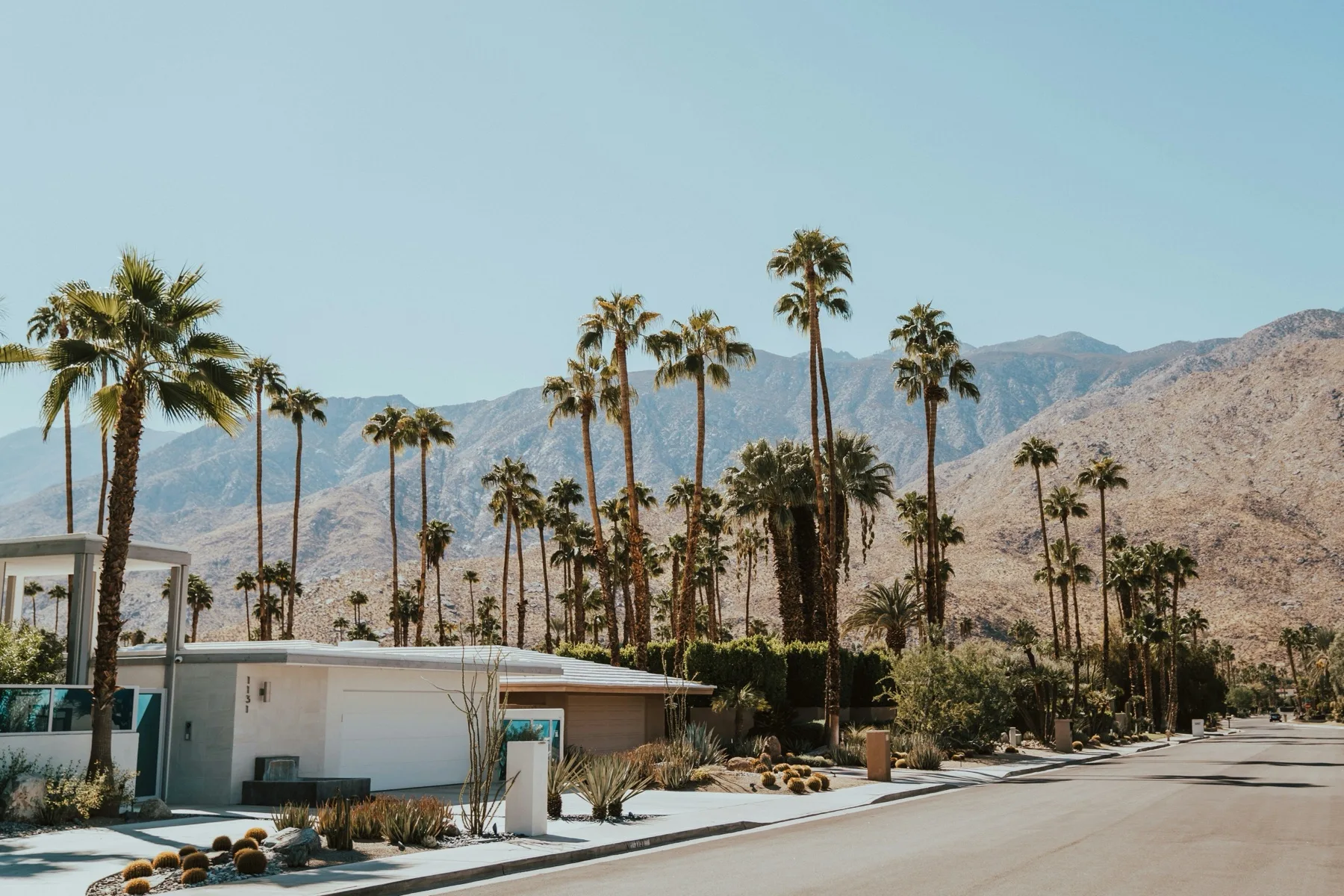
Afternoon: pool again, or rent bikes. Downtown is flat and bikeable. Several shops on Palm Canyon rent by the hour or half-day. The neighborhoods east of downtown (Movie Colony, Ruth Hardy Park area) have some of the best residential mid-century architecture in the city.
Evening: dinner at a restaurant you've been meaning to try, or cook at the rental. Grocery options: Stater Bros. at Ramon Road handles basics. Gelson's on Sunrise Way for better produce and deli options.
Day 3: Joshua Tree Day Trip
Leave by 8am. Joshua Tree's south entrance (Cottonwood) is about 40 minutes from Palm Springs via I-10. The north entrance (Joshua Tree Village) is about 45 minutes via Highway 62. Most people enter through the north side because that's where the most visited sites are: Skull Rock, Cholla Cactus Garden, Hidden Valley, and the Barker Dam trail.
Plan 5 to 6 hours in the park minimum to feel like you've seen it properly. The Barker Dam trail (1.3 miles round trip) is the easiest introduction. Ryan Mountain (3 miles round trip, 1,000 feet of gain) gives you the panoramic view that photographs well. Keys View looks west over the Coachella Valley toward the Salton Sea and is a short walk from the parking area.
Bring more water than you think you need. The park recommends 1 liter per hour per person in warmer months. There are no services inside the park except at Cottonwood and Black Rock campgrounds. Fill up before you enter.
Back in Palm Springs by mid-afternoon. Last evening: find a spot with a rooftop or patio for sunset. The San Jacinto Mountains go orange-pink around golden hour and it's consistently one of the better desert sunsets in California.
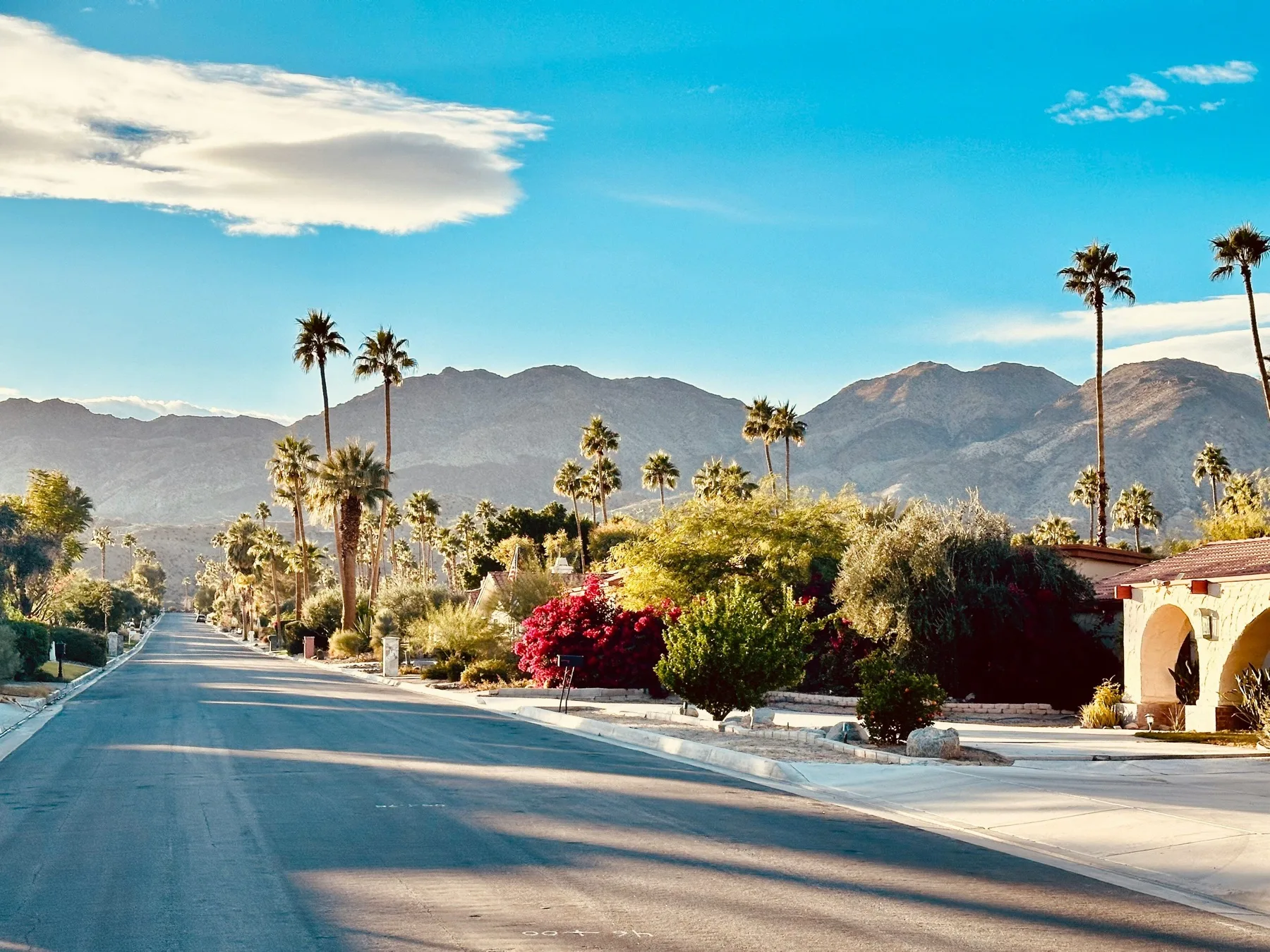
Palm Springs residential streets in peak season. Worth walking for an hour before the day ends.
What to Skip
The Cabazon Dinosaurs near the outlets: unless you have children who specifically want this, it's a 20-minute stop with limited payoff. The outlet malls at Cabazon: fine if shopping is the goal, but they're on the way out of the city, not in it. Any tour bus excursion that claims to "do Palm Springs in 4 hours" will give you a surface reading of a city that rewards staying in it.
Logistics
You need a car. Palm Springs has rideshare but not in abundance, and the aerial tram, Joshua Tree, and most neighborhoods require driving. Getting here from LA takes about 2 to 2.5 hours depending on traffic. Early Friday or after 7pm Friday avoids the worst of it.
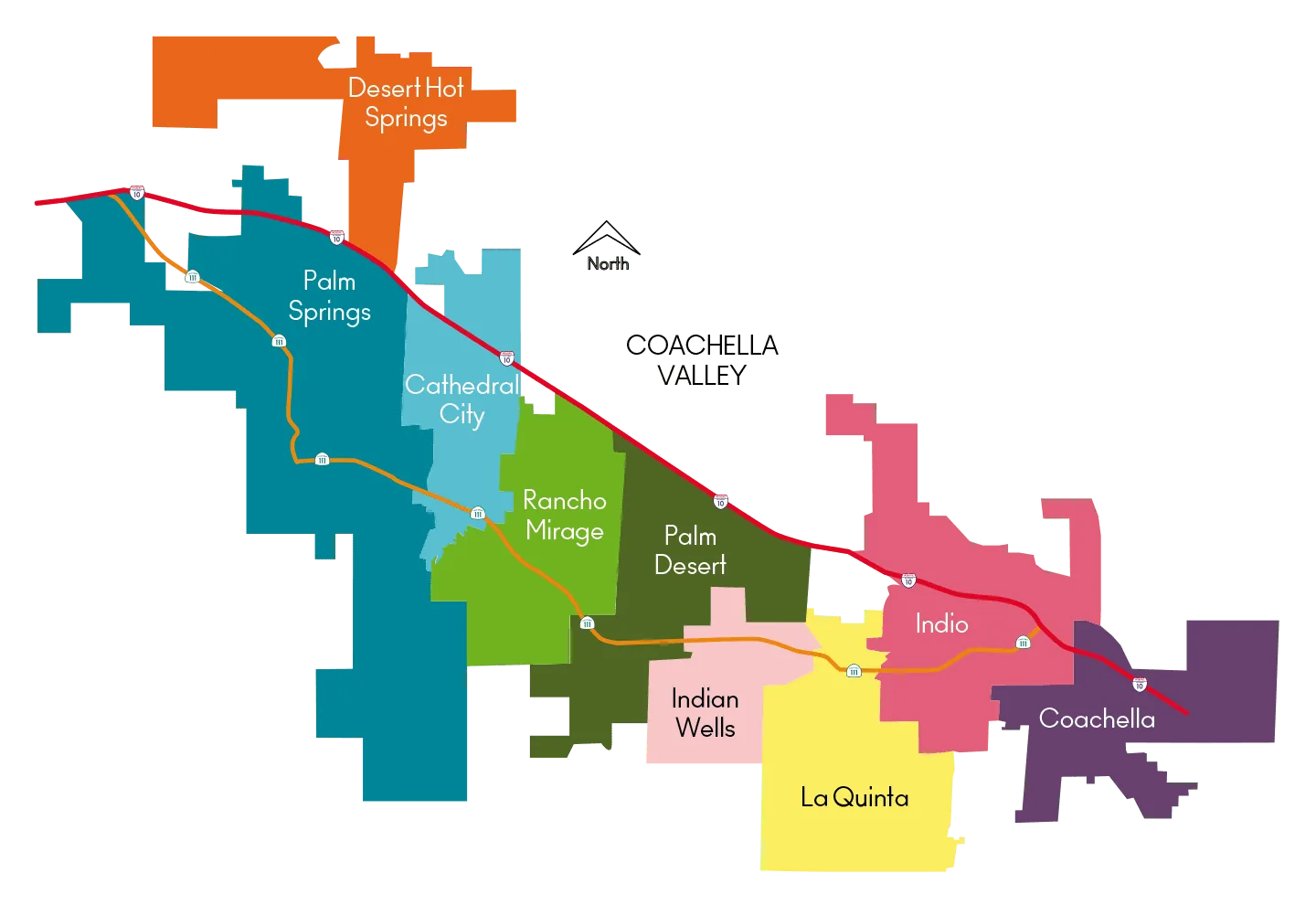
If you're staying in Indio for Coachella or Stagecoach and want to do a Palm Springs day, it's 30 minutes west, easy enough for a day trip. Read our Indio guide for what's on the eastern side of the valley.
Frequently Asked Questions
Is 3 days in Palm Springs enough?
Three days covers the highlights comfortably: the aerial tram, downtown, the Art Museum, and a Joshua Tree day trip. The city is small and walkable, which helps. A long weekend from Friday evening to Monday morning gives you all three full days without rushing any of them.
Do you need a car in Palm Springs?
Yes, for most of this itinerary. Downtown Palm Springs is walkable, but the aerial tram, Joshua Tree, and most residential neighborhoods require driving or rideshare. Rideshare availability is solid in Palm Springs proper during peak season but thinner after midnight and in the east valley.
What is the best time to visit Palm Springs?
October through April. The weather is 70 to 85 degrees most days, cool enough for outdoor walking and hiking. November and March are particularly good windows: warm pool weather, comfortable evenings, and fewer crowds than January or April. Summer is manageable with the right plan, but midday heat from June through September limits outdoor time to mornings and evenings.
How far is Joshua Tree from Palm Springs?
About 40 to 45 minutes from Palm Springs to the Cottonwood South Entrance via I-10, or slightly longer to the north and west entrances via Highway 62. It makes an easy day trip if you leave by 8am and return by mid-afternoon. See the full Joshua Tree day trip guide for entrance options and what to bring.
What should I do in Palm Springs on my first afternoon?
Check into your rental, use the pool, and walk Palm Canyon Drive in the evening. The first afternoon is best treated as a decompression day, not a sightseeing day. Save the tram and the architecture walks for when you're settled. Dinner at Tropicale or anywhere on Palm Canyon is a good entry point into the city's pace.
Is Palm Springs walkable?
Downtown is walkable, but the rest of the itinerary requires a car. The aerial tram, Joshua Tree, Sunnylands in Rancho Mirage, and most residential neighborhoods are not reachable on foot. Rideshare works in Palm Springs proper during peak season, though coverage thins out after midnight and east of the city. Rent bikes for the downtown neighborhoods if you want to cover more ground without driving.
Where should I eat in Palm Springs for a long weekend?
Tropicale on Calle Encilia for dinner on arrival night, it fits the mid-century mood of the city and takes reservations. Sandfish on Indian Canyon for sushi. Koffi (1700 S Camino Real or the North location) for every morning coffee, it's the closest thing to a local institution the city has. Gelson's on Sunrise Way handles grocery needs if you want to cook one night. For a longer local list, the full itinerary covers logistics by day.